Short Trips, Made Easier
LOW SPEED ELECTRIC VEHICLERUTA LSV, a low-speed electric vehicle for seniors and people with limited mobility
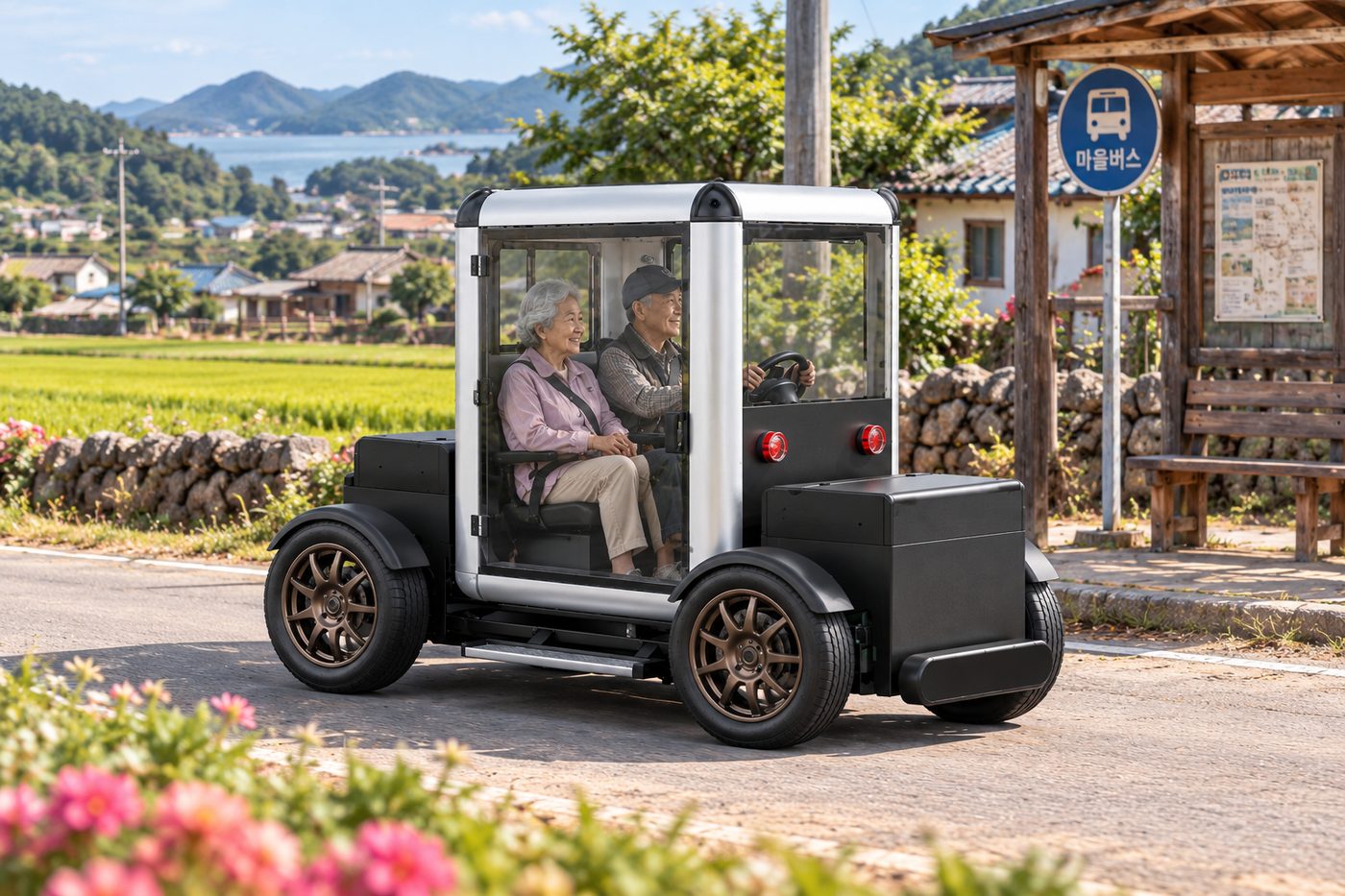
- Top speed40km/h or less
- Seating capacity2seats
- Battery48V LiFePO4
- Storage spaceapprox. 200L
RUTA LSV is a prototype under development. Specifications and features are subject to change.
Even short distances were hard to travel
-
01
Rural areas with limited transport
69min
Average bus interval
Once a driver's license is returned, even nearby places feel far away.
-
02
Small vehicles without enough safety design
Under 50%
Crash safety of micro electric vehicles
The smaller the vehicle, the more safety design matters, not just driving convenience.
-
03
No way to call for help in emergencies
Late discovery
A farmer in his 60s found only in the afternoon
When an accident happens in a remote area, the response can be delayed.
The standard is changing
Instead of returning their licenses, conditional licenses for senior drivers are being discussed in the National Assembly of Korea.
| Condition | RUTA LSV |
|---|---|
| Top speed limit | Designed for a top speed of 40km/h or less |
| Vehicles with advanced safety systems | Driver assistance features being applied step by step |
RUTA LSV is the vehicle built for those conditions.
Sources: Rural Development Administration, "2024 Welfare Survey of Farmers and Fishers" (2025); Kyunghyang Shinmun (2020.02.18); News1, "Tractor rollover in Hapcheon... farmer in his 60s killed"; Gonggam Shinmun (2026.09.07); National Institute of Agricultural Sciences
Designed for safety before speed
RUTA LSV is designed around low-speed driving for short trips, with safety considered in both driving and accident response.
From body design to control systems and remote monitoring, safety is the design standard of RUTA LSV.
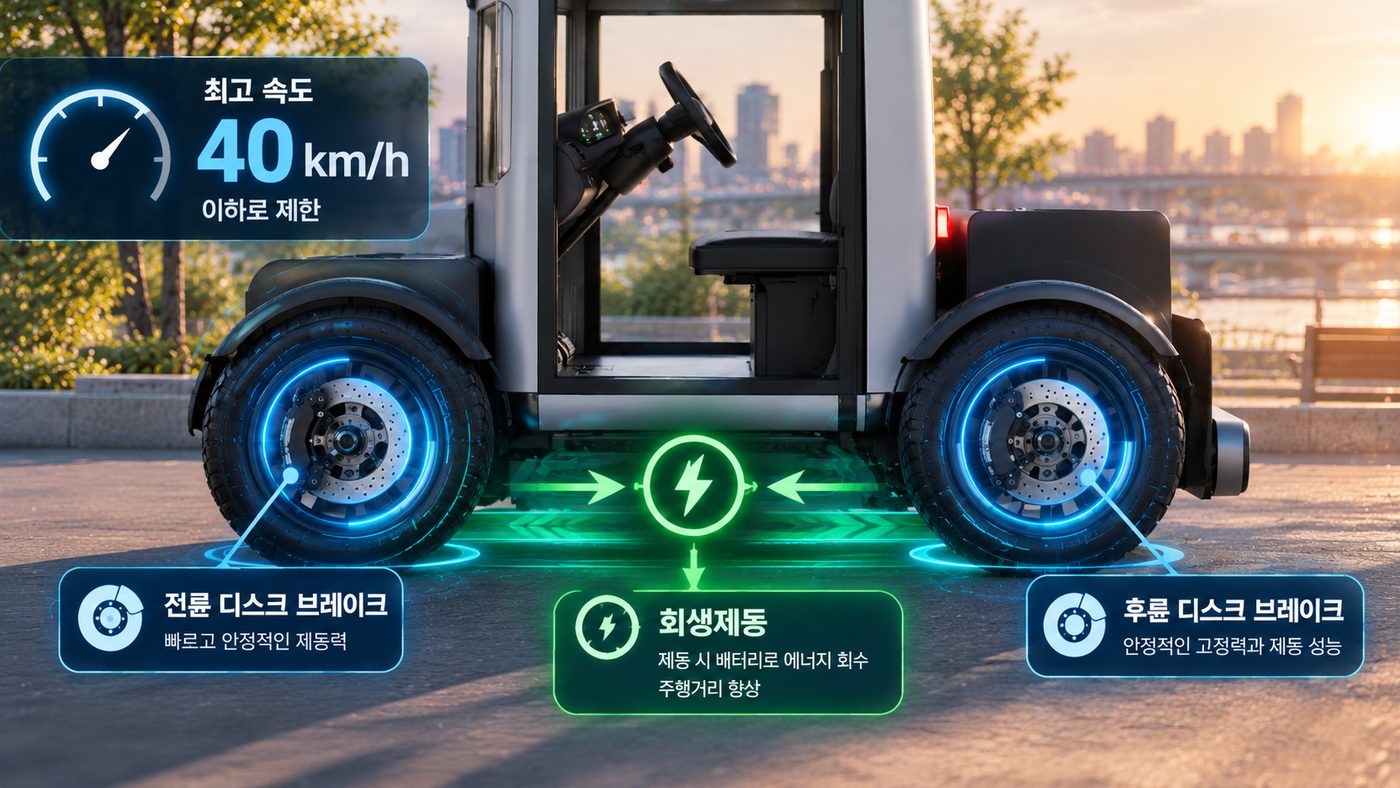
Low-speed safety design
- Top speed of 40km/h
- Front and rear disc brakes combined with regenerative braking
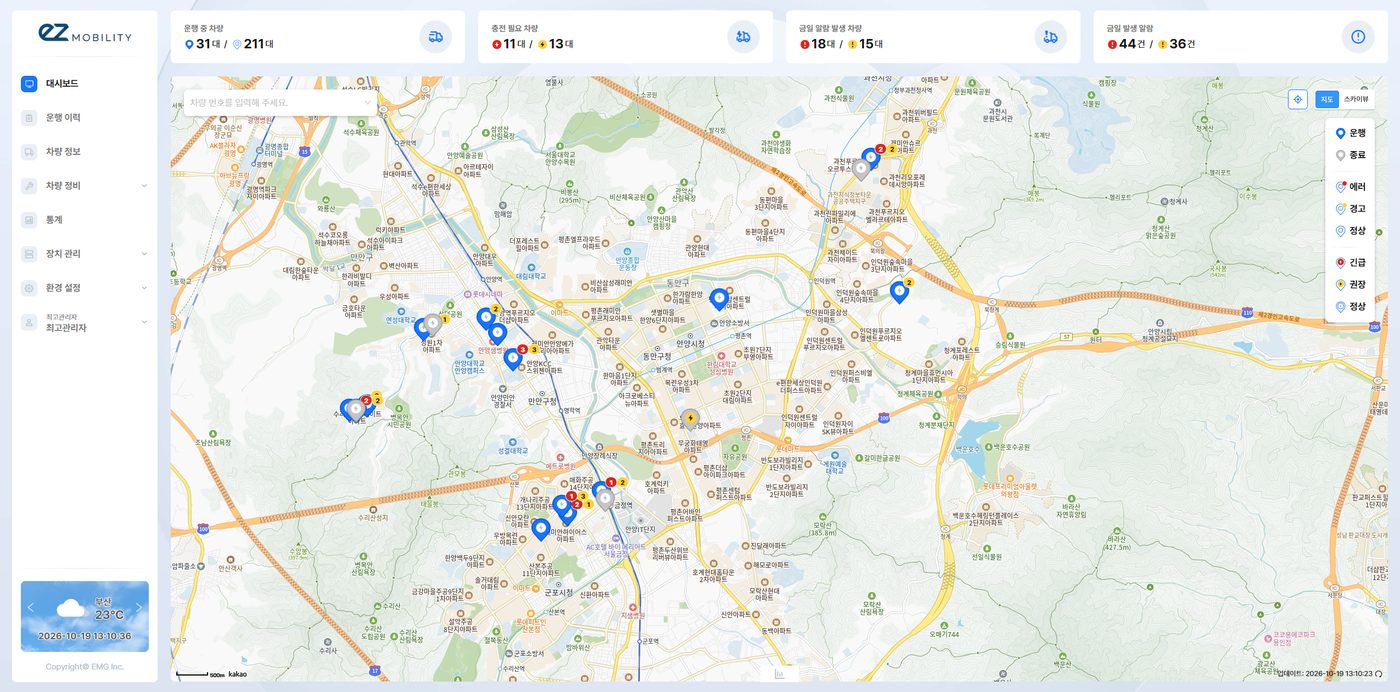
Real-time monitoring and emergency alerts
- Real-time vehicle status monitoring
- Automatic alerts in emergencies

Driver assistance
- Automatic emergency braking and lane keeping assist applied step by step
Safety features planned as standard
- 01Slow start
Limits initial torque at departure to prevent sudden starts.
- 02Autonomous emergency braking (AEB)
Detects obstacles ahead and brakes automatically when a collision risk is detected.
- 03Automatic slowdown on slopes and curves
Designed to adjust speed automatically on slopes and curved roads.
- 04Rollover prevention monitoring
Monitors the vehicle's tilt and movement with a 6-axis gyro sensor.
- 05eCall automatic accident notification
Provides an accident alert function to support a quick response.
- 06Thermal-runaway-resistant battery
A low-voltage battery system under 48V DC lowers the risk of thermal runaway.
Ready for everyday life
From rural villages to tourist sites and golf courses, it is designed for convenient short-distance travel.

The entrance is 900mm wide and 1,300mm high. A side step at about 400mm from the ground makes getting in and out easier.
Carry groceries and daily items, or store luggage when visiting tourist sites.
Applications
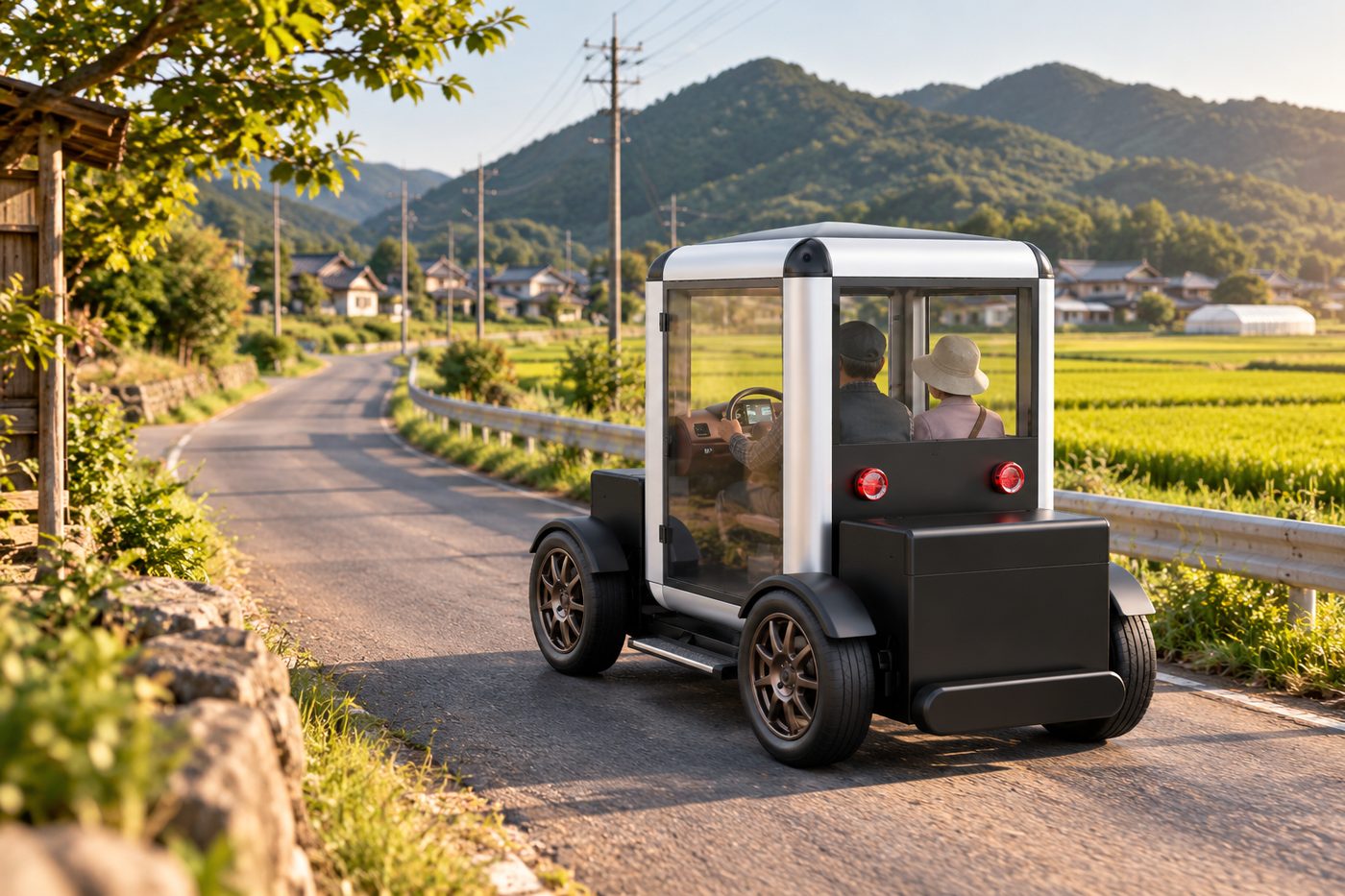


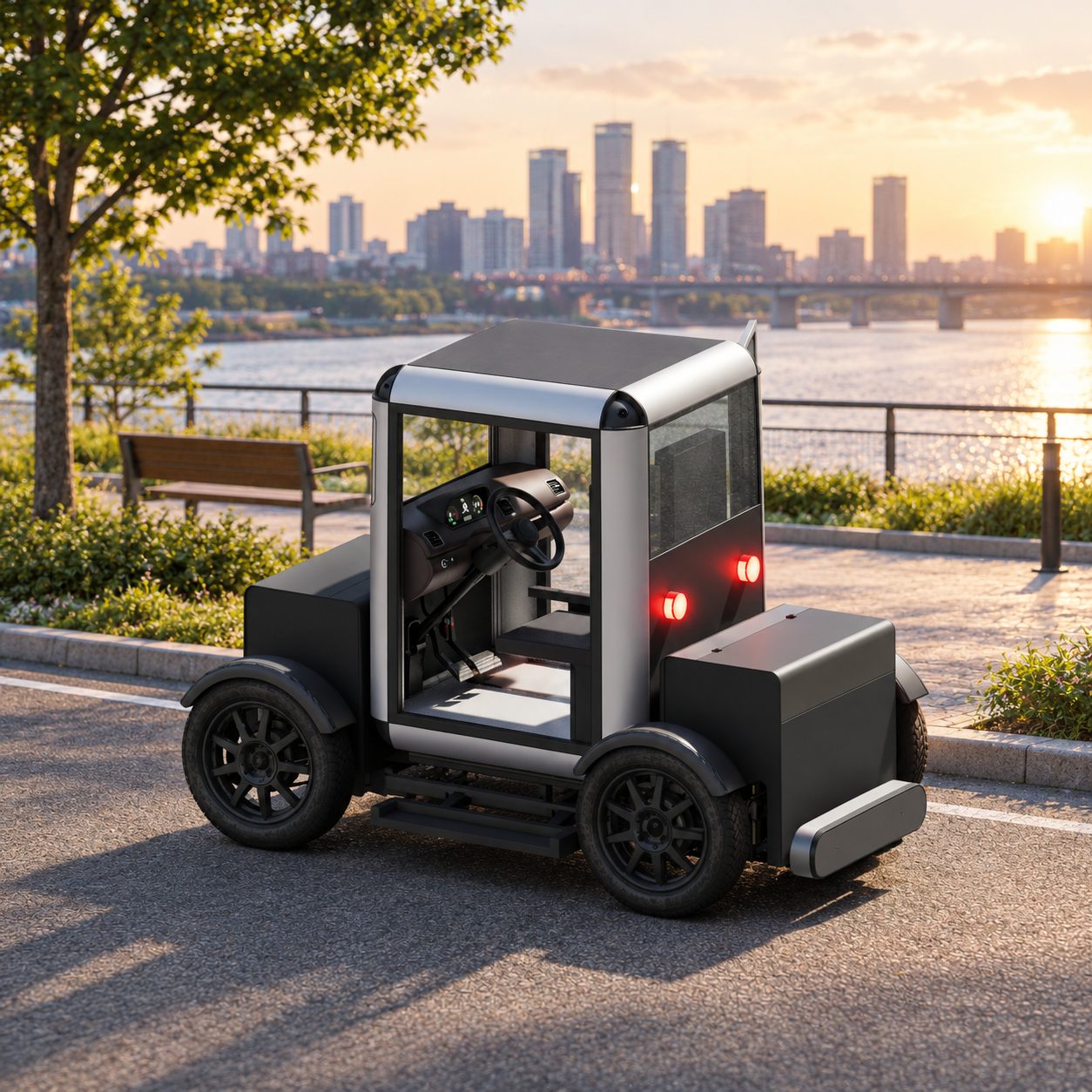
Vehicle images on this page are staged concept images.
We designed the core structure ourselves
For safety features to work properly, the body and electrical systems that support them are essential.
RUTAS designs everything from the frame and body structure to wiring, power distribution and the integrated control system, considering the structure and control of the whole vehicle together.
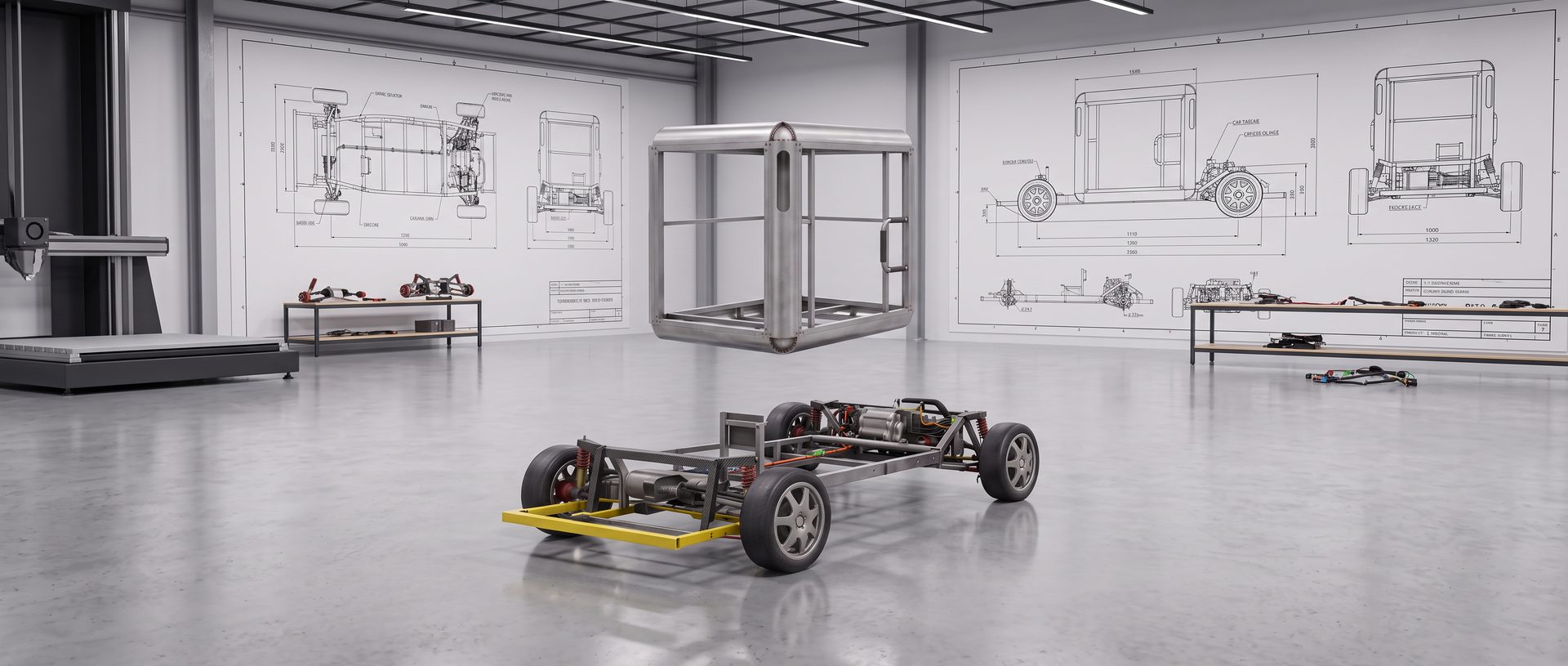
- Frame & Body
Body structure designed for load, vibration and impact, with 3D design drawings
- Vehicle Control Unit (VCU)
In-house H/W and S/W development, CAN integration and fail-safe logic
- Wiring Harness
In-house wiring route design, with continuity, insulation and vehicle tests planned
- 12V / 48V Electrical System
Power distribution and circuits designed in-house based on electrical load calculations
From design to verification
- 01Requirements
Analyze requirements and electrical loads.
- 02Product design
Design the body structure, wiring, circuits and control system.
- 03Prototype build
Apply the design to the prototype.
- 04Performance verification
Review the design through testing and variance management.
Compact, yet thoroughly designed
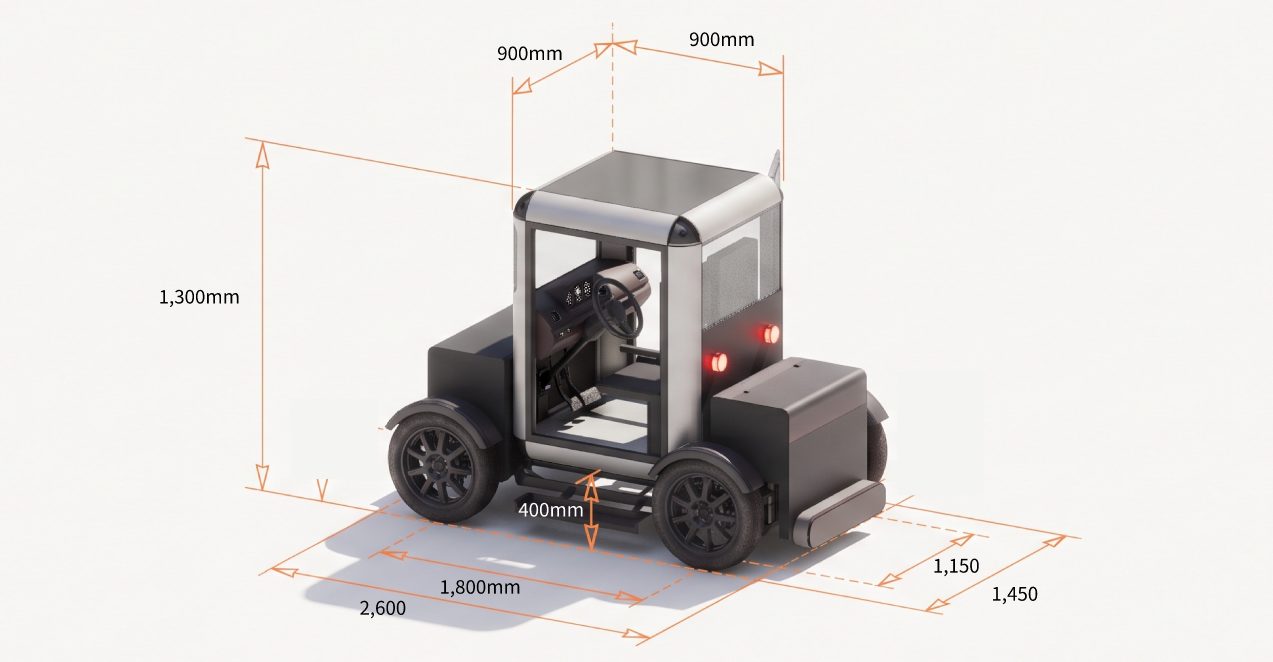
| Seating capacity | 2 seats |
|---|---|
| Top speed | 40km/h or less |
| Battery | 48V LiFePO4, approx. 4–5kWh |
| Auxiliary battery | 12V |
| Motor output | Rated 3kW / Max. 5kW |
| Max. torque | 60Nm or more |
| Drive type | Rear-wheel drive |
| Reduction ratio | 6.2:1 (single reduction) |
| Inverter / MCU | Rated 80A, peak 160A |
| Gross vehicle weight | 500–600kg or less |
| Suspension | MacPherson strut |
| Brakes | Disc (front and rear) |
Based on the prototype under development. Specifications and features are subject to change.
From safety features to autonomous driving
Starting from driver assistance, RUTA LSV moves through monitoring and emergency alerts and remote driving,
toward an autonomous vehicle that drives itself home with a single command, "Take me home," using a saved home address.
- 1Driver assistance
Features for passenger safety, such as automatic emergency braking, lane keeping assist and driver monitoring, will be applied step by step.
- 2Monitoring · Emergency alerts
Through ezMobility, vehicle information such as location and battery status is monitored in real time, with alerts provided in emergencies.
- 3Remote driving (remote control + automated driving)
Combining remote control from a control center with automated driving on set routes, we aim for remote driving that gradually reduces the driver's burden.
- 4Autonomous driving
In the long term, we are developing an autonomous vehicle that can take passengers home by voice command, based on a saved home address.